Who We Are
We began with a single question that families in hospital corridors are rarely ready for. Everything we do now exists to make that question easier to answer.
A conversation that comes too late
In almost every hospital in India, there is a corridor where a family is told that someone they love is not coming back. Somewhere in the next few hours, a transplant coordinator has to ask whether they would consider donating that person's organs.
It is the worst possible moment to hear the question for the first time. Families are grieving, exhausted and surrounded by paperwork they do not understand. Most say no — not because they object, but because they have never discussed it, and nobody wants to make that decision alone.
Vrindvila Foundation exists to move that conversation out of the corridor and into the living room. We want families to have talked about organ donation long before it could ever matter, so that if the moment comes, they already know what their loved one would have wanted.
What we actually do
We are not a hospital and we do not perform transplants. We work in the space around them — the awareness, the paperwork, the waiting and the grief that the medical system has neither the time nor the mandate to handle.
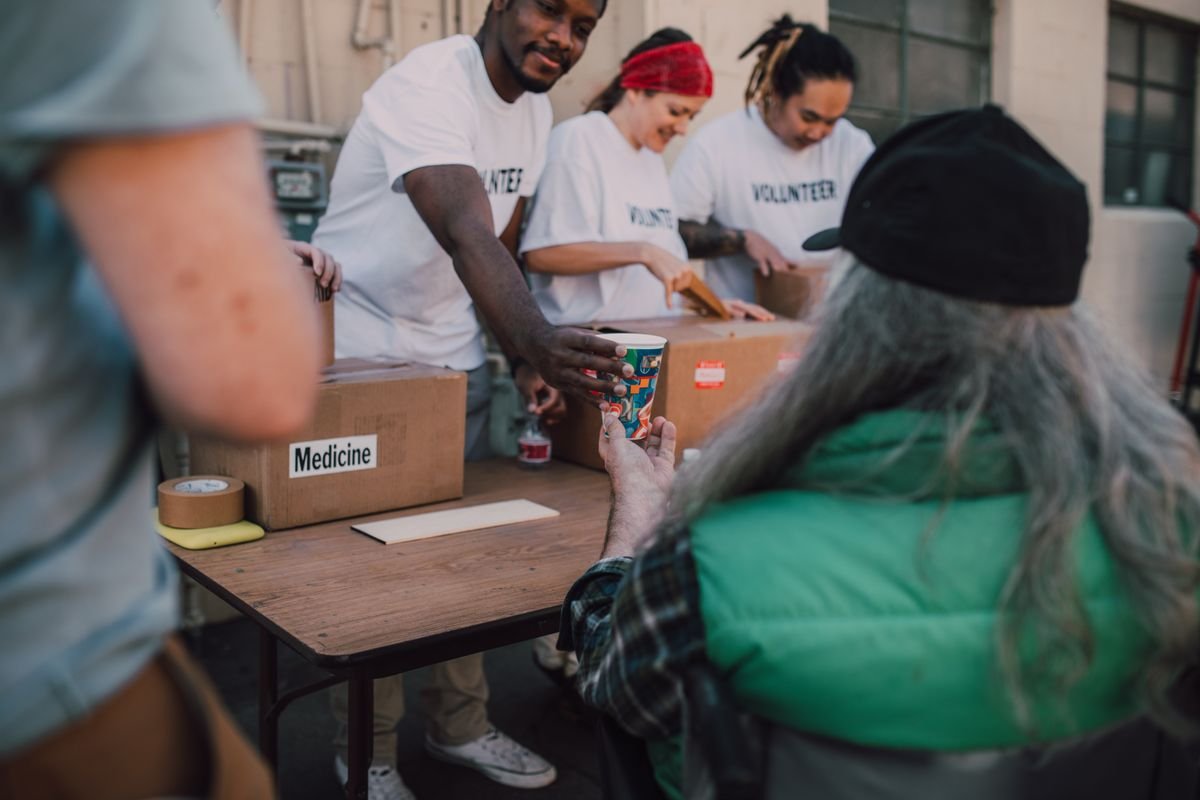
- Awareness that reaches people where they are. Camps in housing societies, colleges, temples, workplaces and RTO offices, in the languages people actually speak at home.
- Pledge registration and support. We help people register their intent, and — more importantly — we send them home with the words to tell their family they have done it.
- Standing with families. Counselling for donor families before and after the decision, and practical help for recipient families navigating hospital and transport logistics.
- Education, health and social service. Our work in schools, clinics and relief drives came first and continues. Communities trust an organisation that shows up for more than one thing.
How we work
Three commitments shape every programme we run.
We never pressure anyone to pledge
A pledge made under social pressure at a camp is worth very little, because it is rarely mentioned at home. We would rather have a hundred people who have genuinely talked to their families than a thousand signatures. Every pledge can be withdrawn at any time, and we say so out loud at every camp.
We go back to the same places
One awareness camp changes very little. We return to the same colleges, societies and districts year after year, because the shift we are asking for is generational, not seasonal.
We do not handle organs, allocation or money between families
Organ allocation in India is governed by NOTTO and the state-level SOTTO network under the Transplantation of Human Organs and Tissues Act. We have no role in it, we never accept payment to influence it, and we will report anyone who asks us to.
India transplants a fraction of what it needs
These are national figures, not ours. They are the reason this Foundation exists.
How we got here
The Foundation is registered
Started by a group of families in Kanpur, several of whom had waited for a transplant themselves. Registered as a public charitable trust with an initial focus on school education support.
Relief work during the pandemic
Ration kits, medicine delivery and oxygen-concentrator lending across Kanpur Nagar district. The volunteer network built in this period became the backbone of everything after it.
First organ donation awareness camp
Held at a Kanpur college after a trustee's family faced the donation question with no preparation. The response made it clear this needed to be a permanent programme.
Counselling support formalised
Trained volunteers began accompanying donor families through the process, and a helpline was opened for families on both sides of a transplant.
Camps move beyond Uttar Pradesh
Partner organisations begin running the Vrindvila camp format in four states, using our training material and volunteer handbook.
Member network opens
A formal membership programme launches, giving pledgers, volunteers and donors a single place to stay connected to the work.
Two minutes today. Possibly eight lives later.
Pledging costs nothing, carries no medical obligation, and can be reversed at any time. The only thing we ask is that you tell your family you have done it.